Hulme developed as a densely populated working-class neighbourhood in the late 19th century. The development of industry in Castlefield saw huge population growth in Hulme, and the construction of large areas of terraced housing.
Hulme in this time was described by Engels as “the more thickly built-up regions chiefly bad and approaching ruin, the less populous of more modern structure, but generally sunk in filth.”
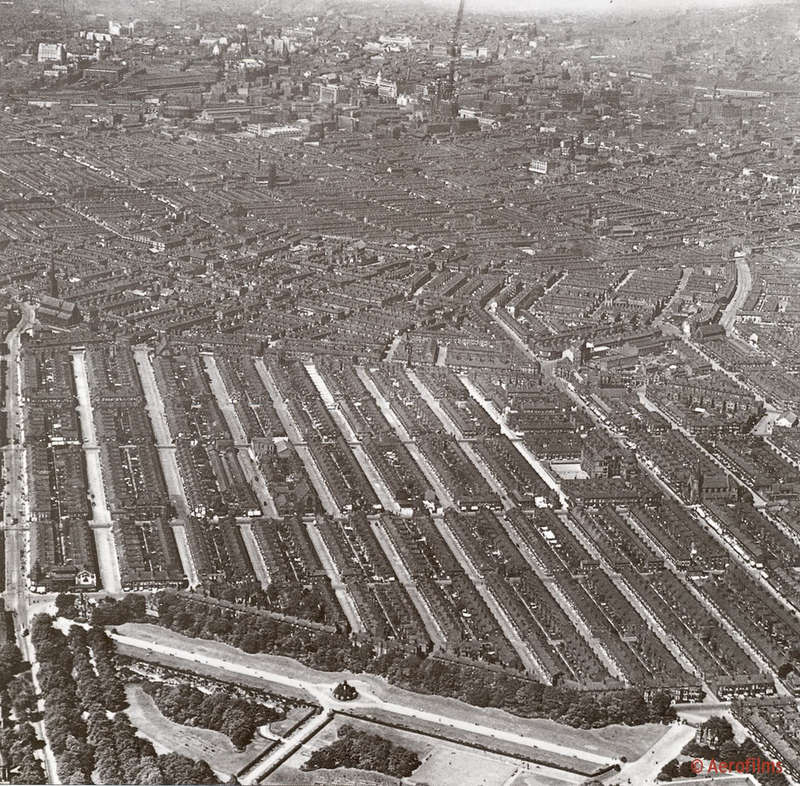

Following WWII, much of this housing, built as back-to-backs and without indoor plumbing was deemed unfit and demolished as part of a vast programme of slum clearance.
A new and innovative design for system built deck access living was built across much of Hulme, but quickly fell into disrepair due to design flaws and a lack of maintenance.
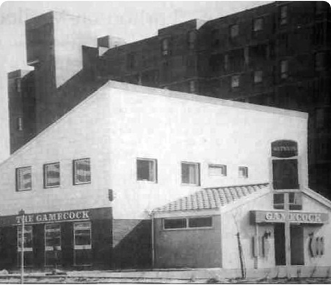
The Gamecock pub was opened in 1974 towards the end of this mass redevelopment of the neighbourhood, along with Hopton Court and Cooper House.
In 1988 Hulme became the testing ground for the Thatcher government’s Housing Action Trusts (HAT). Tenant resistance to this bureaucratic and top-down initiative blocked the attempt to impose a Trust on Hulme and established the principle of a tenant ballot in future HAT proposals.


In 1992 Manchester City Council established Hulme Regeneration Ltd funded by City Challenge. Their principles for the redevelopment attempted to ‘create a new neighbourhood with the “feel” of a more traditional urban community’.
Much of the estates were finally demolished in 1994 and replaced with low-rise houses and flats.
“One of the last remaining fragments of a community lost to dereliction and demolition.”
The Gamecock closed as a pub in the early 2000s. Hopton Court and Cooper House to the east of Hulme were saved and have been recently refurbished.
Hopton Court is managed by One Manchester and Cooper House by Guiness. Cooper House was recently refurbished with new kitchens and bathrooms, new boiler systems and improved insulation.

Hulme today has an ageing population that has seen great changes in their neighbourhood over the last few decades. Many houses and flats are not designed to accommodate the needs of those with physical disabilities and mobility problems.
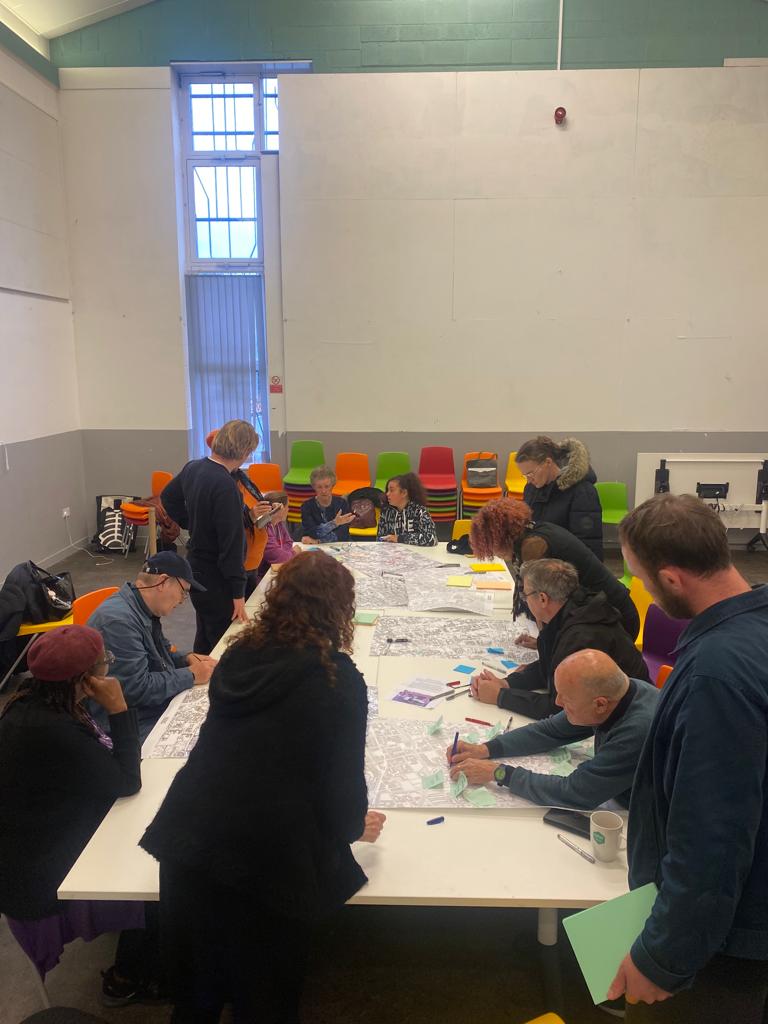
Age Friendly Hulme & Moss Side Neighbourhood partnership was set up in 2017 to research and develop ways of reducing social isolation amongst older people. Some of their key findings included:
- A lack of informal social space, which can be less intimidating for newcomers
- No cafe in leisure centres means there is no where to socialise
- There is little age friendly public space around specialist housing accommodation
- Changes to the neighbourhood has led to a loss of feeling of ownership of the neighbourhood

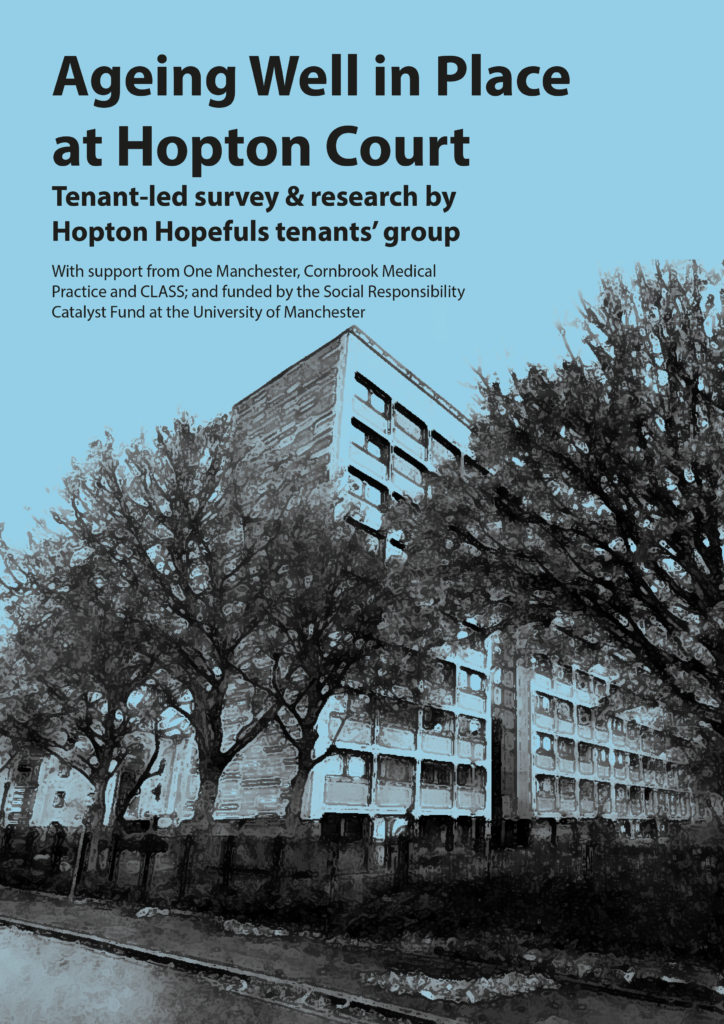
Research by Tina Cribbin, Anne Finnegan, Mark Hammond, Sophie King and Christopher Phillipson, Community Savers and CLASS in 2021 explored options for developing neighbourhood-based services and support for older people living in tower blocks in Hulme.
These services are to support ‘ageing in place’ – defined as ‘remaining living in the community, with some level of independence, rather than in residential care’.
20% of residents on the Aquarius estate are over 50, increasing to 46% in Meredith Court and 75% in nearby tower blocks Hopton Court.
A ‘place-based’ programme for the older population combining service delivery with community-building activities could include:
- Age-banding, housing for over-55s
- Age-friendly adjustments, particularly for mobility around their homes and in communal areas
- A tenant-managed community space and a Hopton Court tenants’ association
- A site based community worker and overnight security.
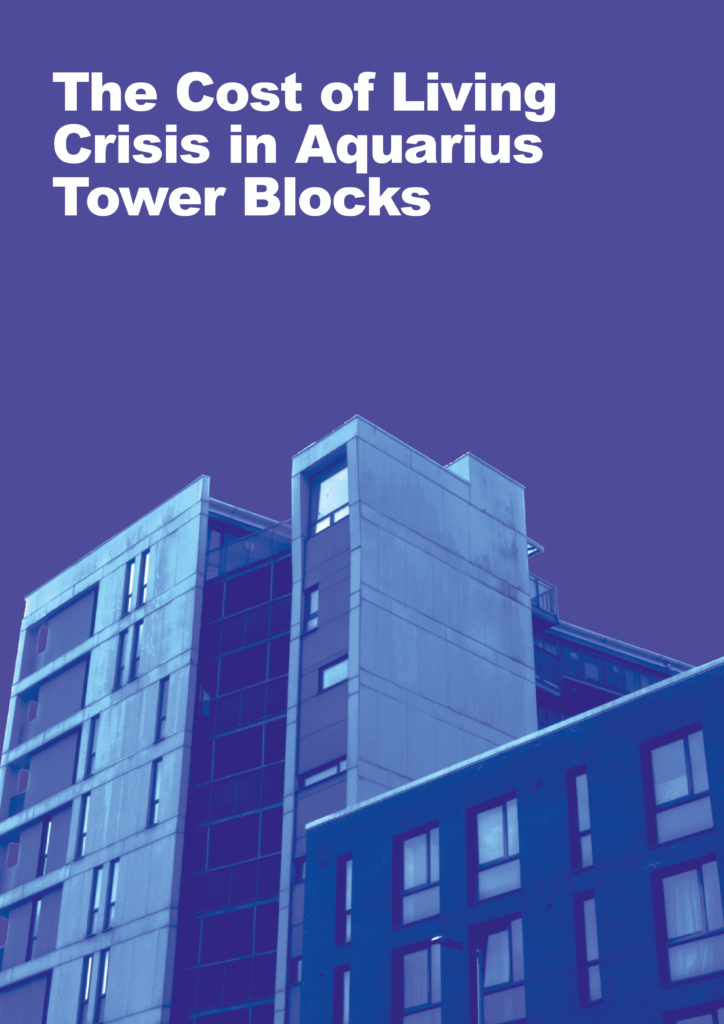
In 2022, a survey of 83 residents showed that at least 72% of households are finding it difficult to cope financially, including paying bills and buying enough healthy food to eat.
To read the full reports click on their covers below.

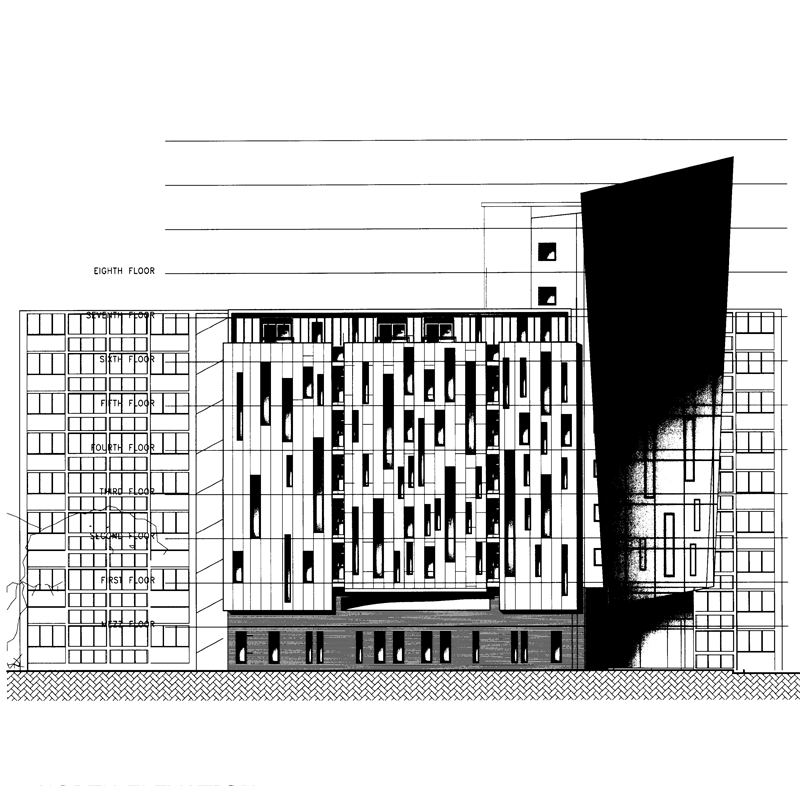
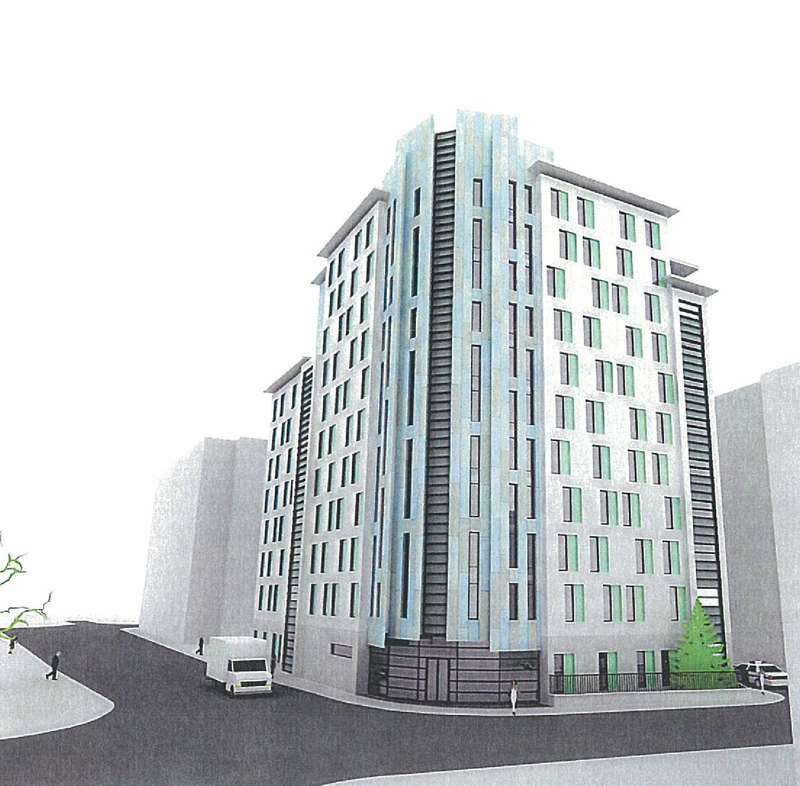
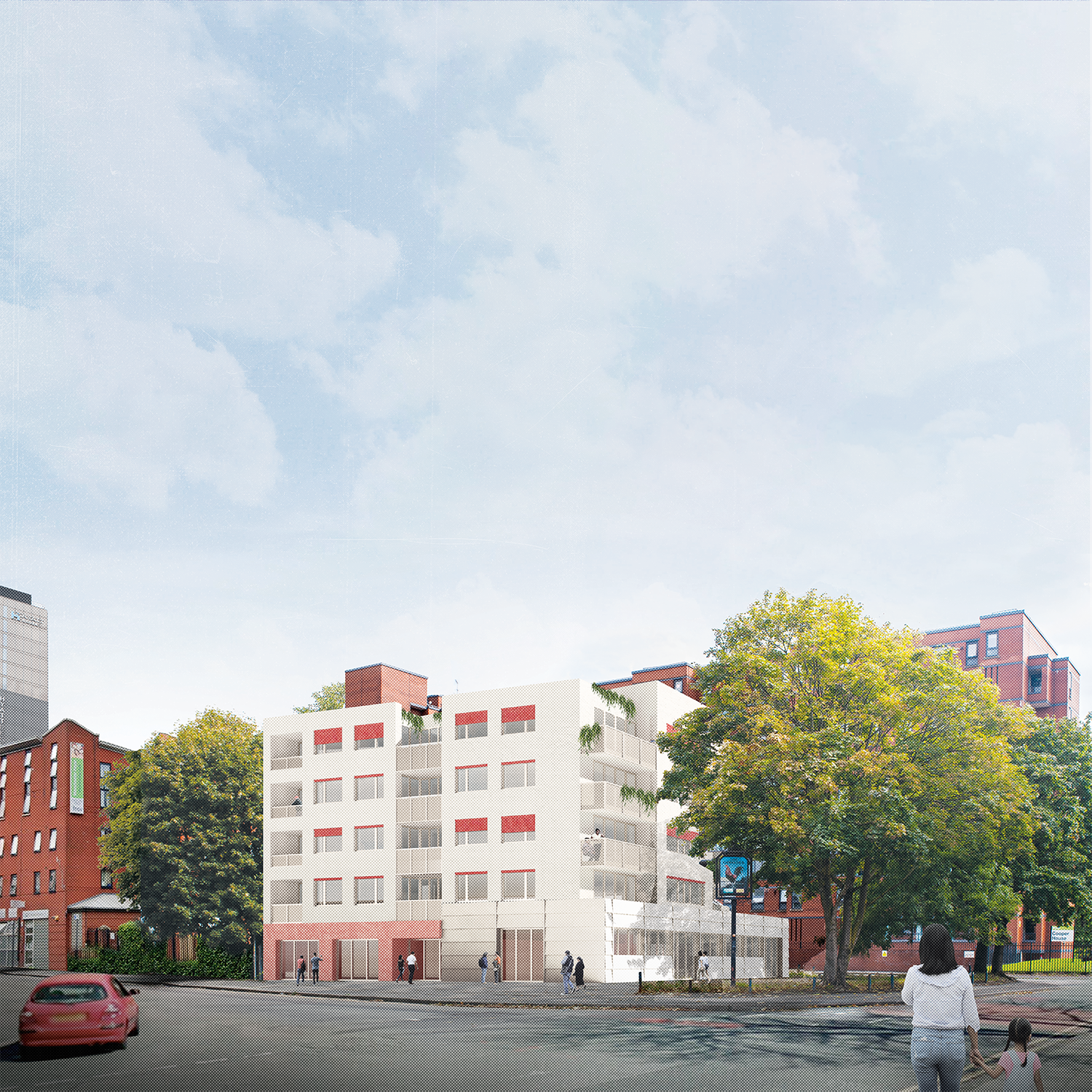
Over the last 15 years many different developers have put forward proposals for developing the Gamecock site.
In 2017 Barrowford Property put in plans for 42 flats over 8 stories – this was initially rejected by Manchester City Council for its height and massing. In 2012, plans for 48 student-accommodation flats were rejected due to its size and the lack of evidence for unmet need for student housing.
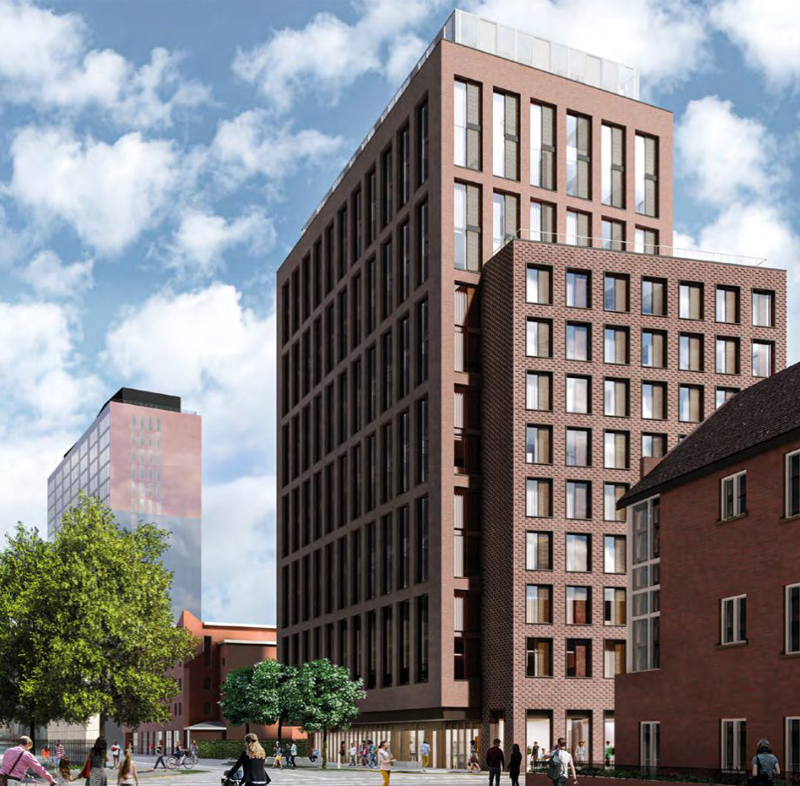
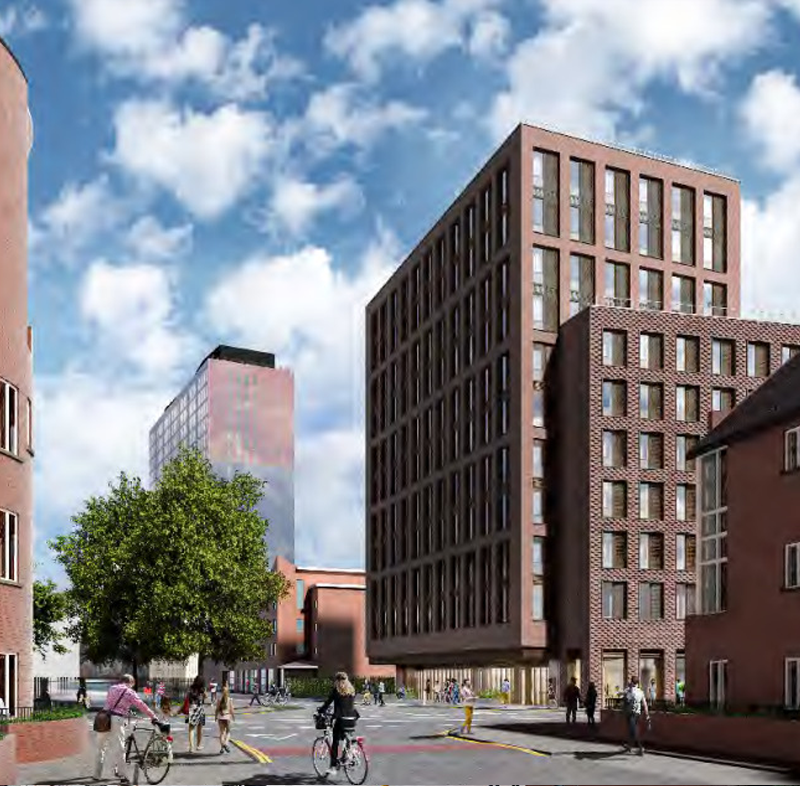
In 2021 the developer Curlew put in plans for 261 student bedrooms in a building 13 stories tall. A revised plan reducing the height to 11 stories and 197 beds was submitted and after being ‘minded to refusal’ was approved by Manchester City Council’s planning committee.
The decision is now going under judicial review with a court date set for 2025. You can support the court case here.